Best Books for Law Students Compared
A reading list for pre-law students, 1Ls and beyond, side by side: what the first year feels like, how to write and argue, the classics of legal theory, and the true stories that show the system at work. Compare purpose, difficulty and length.
| Book | Rating |
|---|---|
 One L | 5/5
|
 Plain English for Lawyers | 5/5
|
 Making Your Case | 5/5
|
 Reading Law | 5/5
|
 Gideon's Trumpet | 5/5
|
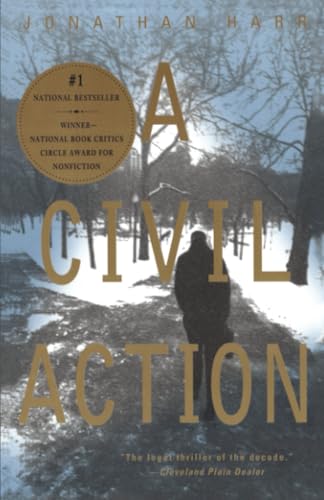 A Civil Action | 5/5
|
 Just Mercy | 5/5
|
 The New Jim Crow | 5/5
|
 The Brethren | 5/5
|
 The Common Law | 4/5
|
 The Concept of Law | 4/5
|
 The Art of Cross-Examination | 5/5
|
Jim's Quick Takes
One L
The classic account of the first year of law school. Scott Turow describes the Socratic method, the pressure of exams and how his thinking changed over his first year at Harvard Law. The details are from the 1970s, but the experience is familiar enough that many students read it before starting. The easiest read on the page and the natural first pick for pre-law students.
Read full review →Plain English for Lawyers
The shortest and most practical book here at 132 pages. Wydick, now updated by Amy Sloan, teaches cutting surplus words, using short sentences and choosing verbs over nouns, with exercises. It's the book to read before a first legal writing assignment, and it pairs with Making Your Case, which covers persuasion rather than clarity.
Read full review →Making Your Case
A guide to persuading judges, from briefs to oral argument, by Justice Antonin Scalia and legal-writing expert Bryan Garner. Short, rule-by-rule sections make it easy to use before moot court or a first appellate brief. Where Plain English for Lawyers is about clear sentences, this is about building an argument.
Read full review →Reading Law
A reference on how courts interpret statutes and other legal texts. Scalia and Garner set out 57 canons of construction, each with its own explanation, from a textualist point of view. At 567 pages it's a book to consult rather than read straight through, and useful for statutory interpretation work whether or not a student shares its philosophy.
Read full review →Gideon's Trumpet
The best introduction to how a case reaches the Supreme Court. Anthony Lewis follows a poor Florida prisoner's handwritten petition to Gideon v. Wainwright, which established the right to appointed counsel for criminal defendants who can't afford a lawyer. Short and clear, it suits pre-law students and anyone starting constitutional or criminal procedure.
Read full review →A Civil Action
The great narrative of civil litigation. Jonathan Harr follows a Massachusetts lawyer's toxic-tort suit against two large corporations, through discovery, expert witnesses, trial and its financial toll on the firm. At 512 pages it's long, but it shows procedure, strategy and cost more vividly than any casebook, and it is often assigned alongside civil procedure.
Read full review →Just Mercy
Bryan Stevenson's memoir of defending people on death row in the American South, built around the case of Walter McMillian, condemned for a murder he didn't commit. It's the most personal book on the page and a strong choice for students drawn to criminal defense or public-interest work. Pairs naturally with The New Jim Crow.
Read full review →The New Jim Crow
Michelle Alexander, a civil rights lawyer, argues that mass incarceration works as a system of racial control, tracing the War on Drugs and the court decisions that shaped policing and sentencing. It's the most argumentative book here and the one most likely to start a debate. More analytical than Just Mercy, which tells a single lawyer's story.
Read full review →The Brethren
An inside account of the Supreme Court under Chief Justice Warren Burger, built from interviews with clerks and others and from internal papers. Woodward and Armstrong show the bargaining and personalities behind major decisions. Some reporting has been disputed over the years; it's still a vivid look at how a court actually works, best read alongside constitutional law.
Read full review →The Common Law
The oldest book on the page, published in 1881. Oliver Wendell Holmes Jr. argues that "the life of the law has not been logic; it has been experience," tracing torts, contracts and possession back to their history. Dense nineteenth-century prose makes it a slow read, best taken a chapter at a time in a jurisprudence or legal history course.
Read full review →The Concept of Law
The central text of modern analytic legal philosophy. H. L. A. Hart separates primary rules from secondary rules and introduces the rule of recognition; this edition includes his Postscript responding to Ronald Dworkin. More abstract than anything else here. Choose it for a jurisprudence seminar, and The Common Law for the historical view.
Read full review →The Art of Cross-Examination
The trial lawyer's classic, first published in 1903. Francis Wellman collects famous cross-examinations and explains why they worked: leading questions, patience and knowing when to stop. Some examples are dated and evidence rules have changed, but it remains a favorite for students heading into trial advocacy or mock trial.
Read full review →How to Choose
Match the book to where you are. Before or during the first year, read One L for what to expect and Gideon's Trumpet for a clear picture of how a case moves through the courts. For legal writing, start with Plain English for Lawyers, then Making Your Case for persuasion; keep Reading Law nearby for statutory interpretation. For trial advocacy, The Art of Cross-Examination.
For context and motivation, A Civil Action shows civil litigation from the inside, while Just Mercy and The New Jim Crow examine criminal justice. The Brethren covers the Supreme Court. The Common Law and The Concept of Law are the theory-heavy picks, best saved for a jurisprudence course or a reader who enjoys philosophy.
Reading Alongside Law School
These books complement coursework rather than replace it. Casebooks, outlines and your professors' assignments come first, and the narrative books here, such as Gideon's Trumpet, A Civil Action and Just Mercy, work well as lighter reading on breaks.
This page describes books for students and readers interested in the law. It is not legal advice. Anyone with a legal problem should speak with a licensed attorney in their jurisdiction.