Books Like The Martian

Want more problem-solving under impossible pressure, with jokes to keep the panic at bay? These novels and true stories share The Martian's science, survival and gallows humor.
Jim's Picks

Project Hail Mary
by Andy Weir

All Systems Red
by Martha Wells

Leviathan Wakes
by James S.A. Corey

The Hitchhiker's Guide to the Galaxy
by Douglas Adams

Endurance
by Alfred Lansing

Deep Survival
by Laurence Gonzales
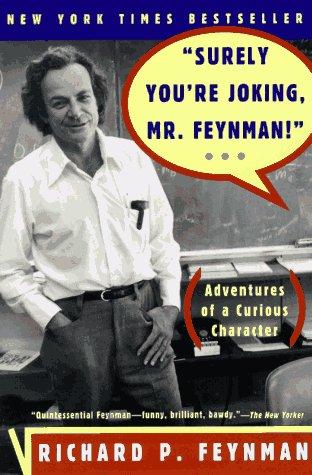
Surely You're Joking, Mr. Feynman!
by Richard Feynman
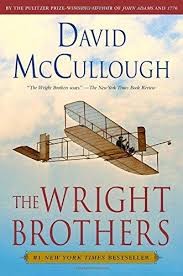
The Wright Brothers
by David McCullough
Why Each Pick
- Project Hail Mary by Andy Weir
- Andy Weir's later novel and the closest match: a lone scientist in space, solving one deadly problem after another with real physics and chemistry, narrated with the same wisecracking voice. Ryland Grace wakes up with no memory of how he got there, so flashbacks fill in the story. It is longer, at 496 pages, and has more heart, with an unexpected partnership at its center.
- All Systems Red by Martha Wells
- For readers who loved Mark Watney's narration most. Murderbot is a security robot that has hacked its own controls and would rather watch TV serials than protect its clients, and its sarcastic, self-aware voice carries the book. It is a 156-page novella, lighter on hard science, and the start of a series about a reluctant hero keeping its humans alive.
- Leviathan Wakes by James S.A. Corey
- Space travel treated as realistically as The Martian treats Mars: thrust, gravity, air and water all matter. A missing-person case and a destroyed ship pull a detective and a ship's officer into a conspiracy across a colonized solar system. It is a bigger, more political story with two narrators, 592 pages, and the first of nine novels.
- The Hitchhiker's Guide to the Galaxy by Douglas Adams
- For readers who mostly want to laugh in space. Arthur Dent is rescued seconds before Earth is demolished and drifts through a galaxy that makes no sense. It shares The Martian's comic voice and its hero stranded far from home, but it is pure absurdist comedy with no interest in real science. It is short, at 224 pages, and the first of Douglas Adams's five books in the series.
- Endurance by Alfred Lansing
- The true story closest to Watney's ordeal. In 1915 Shackleton's ship was trapped and then crushed by Antarctic pack ice, and his crew survived for months on the ice, in open boats and on a barren island before rescue. Like Watney, they survived on planning, improvisation and morale. Lansing's account is nonfiction, written from survivors' diaries and interviews.
- Deep Survival by Laurence Gonzales
- The science behind why Watney's attitude matters. Gonzales studies real accidents and survivors to explain why some people stay calm, keep a sense of humor and break a crisis into small tasks while others panic. It reads like a series of adventure stories mixed with neuroscience and psychology, and it is nonfiction, at 336 pages.
- Surely You're Joking, Mr. Feynman! by Richard Feynman
- For readers who liked Watney's irreverent delight in science. Physicist Richard Feynman tells stories of cracking safes at Los Alamos, playing bongo drums and solving problems out of pure curiosity. It is a memoir made of short anecdotes, with no survival plot, but it shares the same joy in figuring things out and the same disregard for authority.
- The Wright Brothers by David McCullough
- Engineering by trial and error, the way Watney works through each failure. Two Ohio bicycle mechanics with no formal training built their own wind tunnel, tested and rebuilt their designs, and flew at Kitty Hawk in 1903. McCullough's biography is calmer than The Martian, with no comedy, but it shows how stubborn, methodical problem-solving changed the world.
What to Read After The Martian
For more of the same, Project Hail Mary is the obvious next book, with the same author, the same mix of science and jokes, and an even bigger problem to solve. If it was the narrator's voice that kept you reading, All Systems Red and The Hitchhiker's Guide to the Galaxy both have narration that is funny in the face of danger, though neither is as committed to real science. If you want realistic space travel on a larger canvas, Leviathan Wakes is the strongest choice.
If what you loved was the survival, the step-by-step improvisation that keeps one person alive, the true stories here may suit you best. Endurance is a real-life ordeal as extreme as Watney's, and Deep Survival explains the psychology that helps people live through one. Surely You're Joking, Mr. Feynman! and The Wright Brothers celebrate the curious, hands-on tinkering that saves Watney again and again.
Fiction or True Stories?
Four picks are novels and four are nonfiction. Project Hail Mary, All Systems Red, Leviathan Wakes and The Hitchhiker's Guide to the Galaxy are science fiction, from hard science to pure comedy. Endurance, Deep Survival, Surely You're Joking, Mr. Feynman! and The Wright Brothers are true stories, and they suit readers who liked The Martian's problem-solving more than its setting.
All Systems Red is the shortest pick, a 156-page novella, and works as a quick palate cleanser. Leviathan Wakes, at 592 pages, and Project Hail Mary, at 496, are the biggest commitments. Leviathan Wakes opens a nine-novel series, and All Systems Red begins a long run of Murderbot stories, so those two are the choices for readers who want to keep going.