Books Like Katabasis
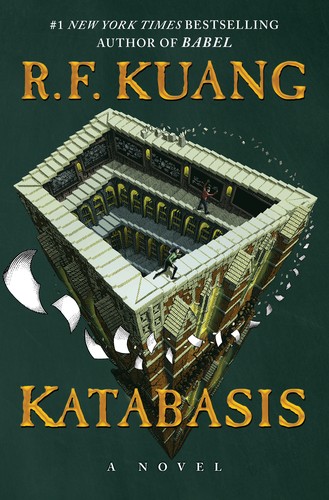
Want more after R. F. Kuang's Katabasis? These picks share its dark academia, its rival scholars, its descents into myth and the underworld, and its love of ideas.
Jim's Picks
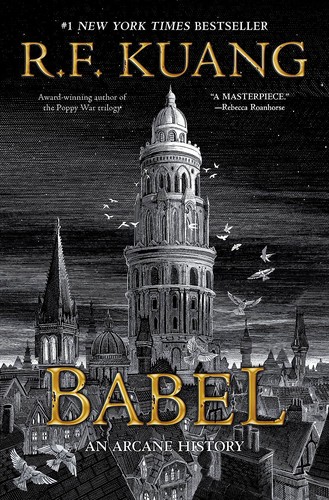
Babel
by R. F. Kuang

The Secret History
by Donna Tartt

Piranesi
by Susanna Clarke

The Name of the Wind
by Patrick Rothfuss

Circe
by Madeline Miller

American Gods
by Neil Gaiman

Good Omens
by Terry Pratchett & Neil Gaiman

The Myth of Sisyphus
by Albert Camus
Why Each Pick
- Babel by R. F. Kuang
- Kuang's earlier dark academia novel, set at Oxford instead of Cambridge. An orphan from Canton trains as a translator at an institute whose word-based magic powers the British Empire. It shares Katabasis's magic built from scholarship and its sharp view of academic ambition. It is more political and less playful, a 560-page argument about empire, and its final act is grim.
- The Secret History by Donna Tartt
- For students devoted to a brilliant, dangerous teacher. A circle of classics students at an elite Vermont college fall under the spell of their professor and Greek ideals, and cross a terrible line. Like Alice and her advisor, they would do almost anything for his approval. There is no magic and no underworld, just a slow, literary crime novel told in hindsight, at 559 pages.
- Piranesi by Susanna Clarke
- For an otherworld that has to be mapped and reasoned through. Piranesi keeps careful journals about an endless house of statues and tides, until clues suggest someone has been lying to him. It shares Katabasis's sense of a strange realm explored with a scholar's patience and its pleasure in careful reasoning. It is short, at 272 pages, and gentle where Kuang is biting.
- The Name of the Wind by Patrick Rothfuss
- For magic taught as a rigorous academic subject, with rivals at every turn. Kvothe fights his way into a legendary university where his tuition, enemies and ambitions all threaten his place. Like Alice, he is gifted, proud and under constant pressure to prove himself. It is a long, classic fantasy adventure rather than a satire, and the trilogy is unfinished.
- Circe by Madeline Miller
- For myth retold by a sharp woman who refuses the role she is given. Circe, a minor goddess dismissed by her family, discovers witchcraft and is exiled to an island, where heroes of Greek myth pass through her life. Like Katabasis, it is steeped in classical stories and in a woman claiming her own power. It is lyrical and inward, about gods rather than graduate school.
- American Gods by Neil Gaiman
- For old myths loose in the modern world. Ex-convict Shadow Moon is hired by the mysterious Mr. Wednesday and pulled into a war between the old gods immigrants brought to America and new gods of media and technology. It shares Katabasis's love of mythology and its journeys between worlds. It is a sprawling road novel, at 541 pages, with no academia at all.
- Good Omens by Terry Pratchett & Neil Gaiman
- For a version of Hell played for laughs. An angel and a demon who have grown fond of humanity try to stop the apocalypse, while Heaven and Hell behave like squabbling bureaucracies. It shares Katabasis's satirical streak and its pleasure in turning the afterlife into something absurd. It is a comic fantasy, much lighter, with none of Kuang's darkness.
- The Myth of Sisyphus by Albert Camus
- For the philosophy underneath. Camus starts from whether life is worth living and builds his idea of the absurd around Sisyphus, condemned in the underworld to push a boulder uphill forever. Katabasis treats Hell as a place to think hard about logic and meaning, and this short essay, at 212 pages, is the nonfiction pick for readers who enjoyed that side most.
What to Read After Katabasis
For more of Kuang's dark academia, read Babel next. The Secret History is the classic of students devoted to a dangerous teacher, and The Name of the Wind suits readers who loved magic studied like a hard science.
If the descent into myth was the draw, try Circe, American Gods or Piranesi. Good Omens is the funny take on Heaven and Hell, and The Myth of Sisyphus is the philosophy pick.
Tone and Content
Katabasis and Babel are dense, long and dark, and The Secret History turns on a killing. American Gods has violence and sex scenes. Good Omens and Piranesi are the lightest and gentlest picks, and The Myth of Sisyphus is a short essay rather than a novel.